AHAs are a group of water-soluble acids derived from fruits, milk. Or sugar cane that exfoliate the skin's surface. AHAs work by loosening the bonds between dead skin cells, promoting cell turnover. And revealing smoother, brighter skin underneath. Common AHAs include glycolic acid, lactic acid. And citric acid, often used in skincare products and professional treatments.
Category
Chemical exfoliants
Used for
Skin renewal, brightening, anti-aging
Common confusion
Often mistaken for BHAs, which are oil-soluble and better for acne-prone skin
Also called
Alpha Hydroxy Acids
Often discussed with
Chemical Peels, Exfoliation Treatments
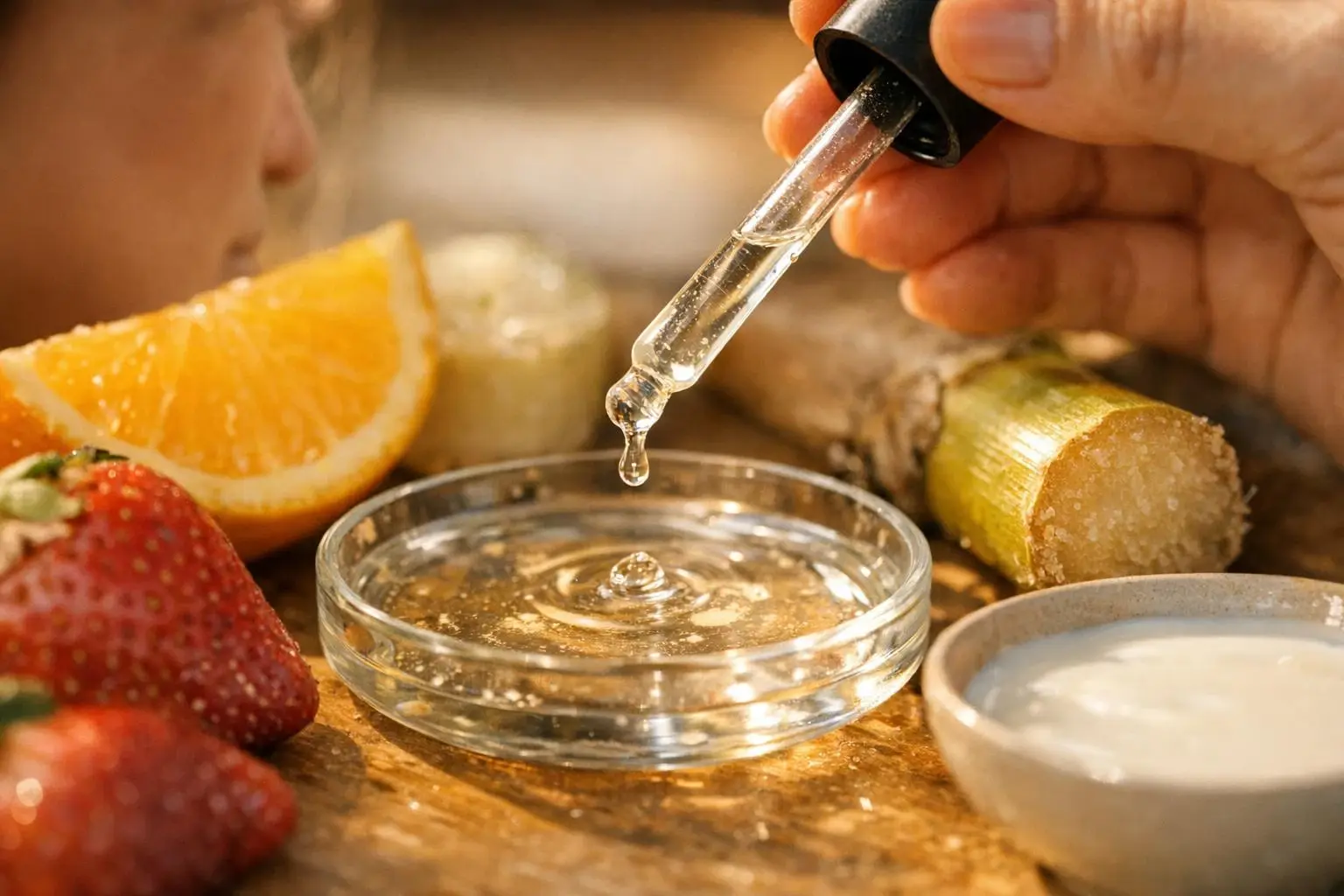
AHAs. Or alpha hydroxy acids, are a class of chemical compounds naturally found in foods like sugarcane, milk. And citrus fruits. In skincare, AHAs are used to exfoliate the outer layer of the skin, known as the epidermis. This process helps remove dead skin cells, unclog pores. And improve the skin's overall texture and appearance. Unlike physical exfoliants, such as scrubs, AHAs work chemically by dissolving the bonds that hold dead skin cells together, making them easier to shed.
Related glossary terms: Alpha Hydroxy Acids, Beta Hydroxy Acid, Glycolic Acid.
AHAs are particularly effective for addressing common skin concerns like dullness, fine lines, hyperpigmentation. And rough texture. They're water-soluble, meaning they work on the skin's surface and are best suited for dry or sun-damaged skin types. Because AHAs can increase skin sensitivity to the sun, they are often recommended for use in evening routines or followed by broad-spectrum sunscreen during the day.
AHAs function by breaking down the bonds between dead skin cells, a process known as desquamation. The outer layer of the skin, the stratum corneum, is made up of dead skin cells held together by lipids. AHAs weaken these bonds, allowing the dead cells to slough off more easily. This reveals the fresher, healthier skin underneath and stimulates the production of new cells, which can improve skin tone and texture over time.
The effectiveness of AHAs depends on their concentration, pH level. And the type of AHA used. For example, glycolic acid, derived from sugarcane, has the smallest molecular size of all AHAs, allowing it to penetrate the skin more deeply. Lactic acid, derived from milk, is slightly larger and gentler, making it a good option for sensitive skin. Citric acid, from citrus fruits, is often used for its brightening properties. Professional treatments typically use higher concentrations of AHAs than over-the-counter products, providing more dramatic results.
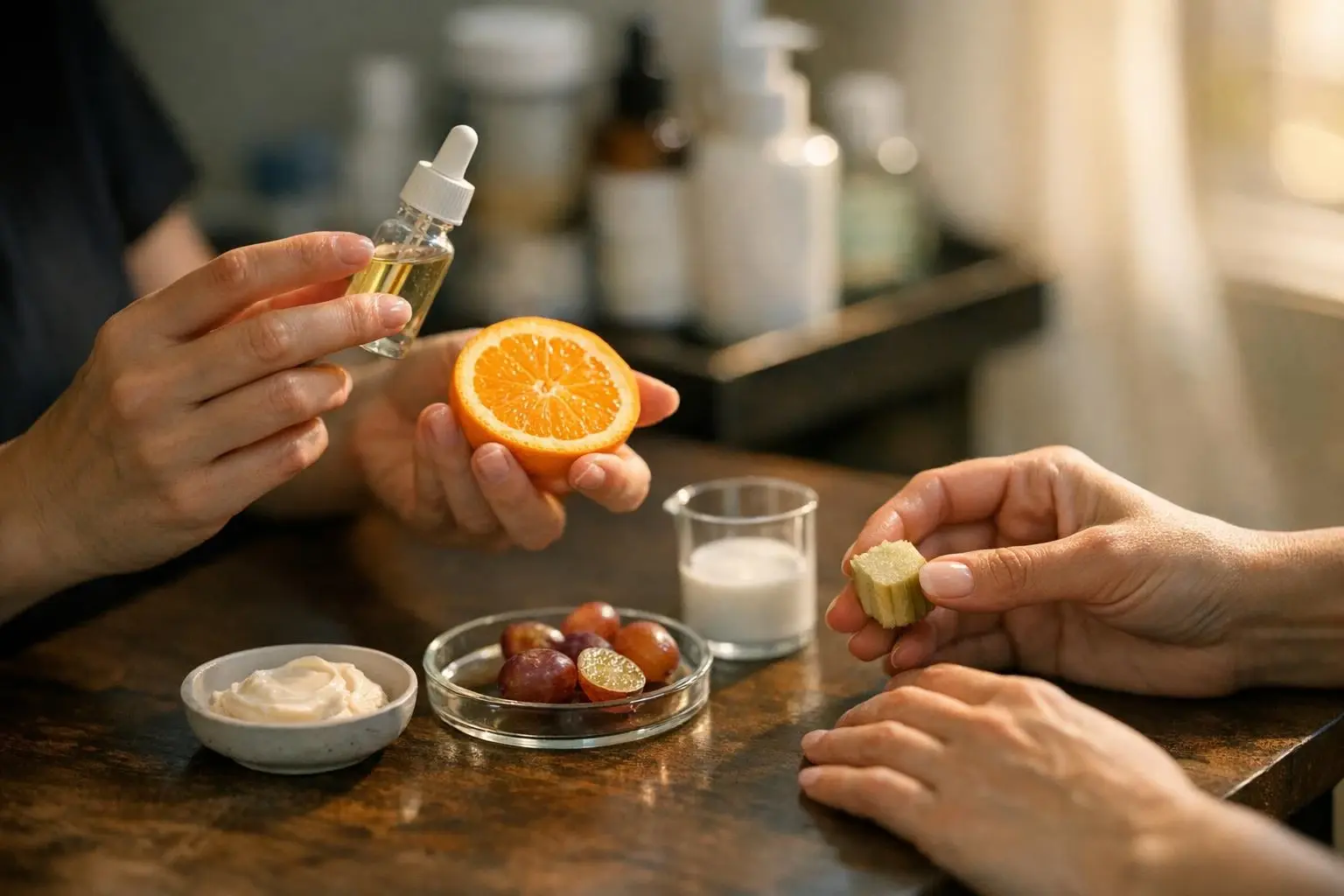
AHAs are a cornerstone of modern skincare because they address multiple skin concerns without the need for invasive procedures. By promoting cell turnover, AHAs can reduce the appearance of fine lines, wrinkles. And hyperpigmentation, making the skin look more youthful and radiant. They also help improve skin texture by smoothing rough patches and reducing the appearance of pores. For individuals with dry or sun-damaged skin, AHAs can restore moisture and improve the skin's ability to retain hydration.
In addition to their cosmetic benefits, AHAs can boost the effectiveness of other skincare products. By removing the layer of dead skin cells, AHAs allow serums, moisturizers. And treatments to penetrate more deeply and work more effectively. This makes AHAs a valuable addition to any skincare routine, particularly for those looking to address signs of aging or uneven skin tone.
AHAs are particularly beneficial in certain situations and for specific skin concerns. They are most effective for individuals with dry, dull. Or sun-damaged skin, as well as those looking to reduce the appearance of fine lines, wrinkles. Or hyperpigmentation. AHAs can also be helpful for people with rough or uneven skin texture, as they promote smoother, softer skin over time.
Professional AHA treatments, such as chemical peels, are often recommended for more intensive exfoliation. These treatments use higher concentrations of AHAs to achieve deeper exfoliation and more dramatic results. But they should always be performed by a licensed skincare professional to cut down on the risk of irritation or damage. After any AHA treatment, it's crucial to protect the skin from sun exposure, as AHAs can increase photosensitivity and the risk of sunburn.
BHAs, like salicylic acid, are oil-soluble and penetrate deeper into pores, making them better for acne-prone or oily skin. While AHAs are water-soluble and work on the skin's surface.
Retinoids promote cell turnover and collagen production but work deeper in the skin and can be more irritating. While AHAs focus on exfoliating the surface and are generally gentler.
AHAs are highly effective but require careful use. Over-exfoliation can compromise the skin barrier, leading to sensitivity or irritation. Always introduce AHAs gradually and pair them with hydrating and soothing ingredients to maintain skin health.
A client with sun-damaged skin visits a salon for a professional chemical peel using glycolic acid. After the treatment, their skin appears brighter and feels smoother. The esthetician recommends using a gentle lactic acid toner at home to maintain results and applying sunscreen daily to protect the newly exfoliated skin.
Alpha Hydroxy Acids are a group of natural and synthetic acids used in skincare to exfoliate dead skin cells, improve texture. And reduce signs of aging. Derived from fruits, milk. Or sugar cane, they dissolve the bonds between skin cells, allowing smoother, brighter skin to emerge. Common types include glycolic acid, lactic acid.
Beta Hydroxy Acid is a group of oil-soluble exfoliating compounds used in skincare to penetrate deep into pores, dissolve excess oil. And remove dead skin cells. The most common type, salicylic acid, treats acne, blackheads. And uneven skin texture by unclogging pores and reducing inflammation without stripping the skin’s natural moisture.
Glycolic Acid is a colorless, odorless alpha hydroxy acid (AHA) derived from sugar cane. It's one of the smallest AHAs, allowing it to penetrate the skin easily. Glycolic Acid works by dissolving the bonds between dead skin cells, promoting exfoliation and revealing smoother, brighter skin underneath.
Lactic Acid is a colorless, water-soluble alpha hydroxy acid (AHA) naturally produced by muscles during intense exercise and found in sour milk products like yogurt. In skincare, Lactic Acid is synthetically derived to gently exfoliate dead skin cells, promote hydration.
Hyperpigmentation is a common skin condition where patches of skin become darker than the surrounding area due to excess melanin production. It can result from sun exposure, hormonal changes, inflammation. Or skin injuries. While usually harmless, it often affects appearance and may signal underlying skin health concerns.
Skin Barrier is the outermost layer of the skin, called the stratum corneum, that acts as a protective shield. It prevents harmful substances like bacteria, pollutants.
Posh Boutique WPB
Contact Posh Boutique WPB for practical guidance on AHAs and related beauty salon work in West Palm Beach.