Dermaplaning is a non-invasive exfoliation treatment that uses a sterile surgical scalpel to gently scrape away dead skin cells and fine vellus hair (peach fuzz) from the face. This process reveals smoother, brighter skin, improves product absorption. And reduces the appearance of fine lines, acne scars. And dullness without chemicals or downtime.
Category
Exfoliation treatment
Used for
Brightening skin, reducing fine lines, improving product absorption
Common confusion
Often mistaken for shaving. But removes dead skin cells, not just hair
Also called
Facial shaving, Blade exfoliation
Often discussed with
Facials, Exfoliation Treatments
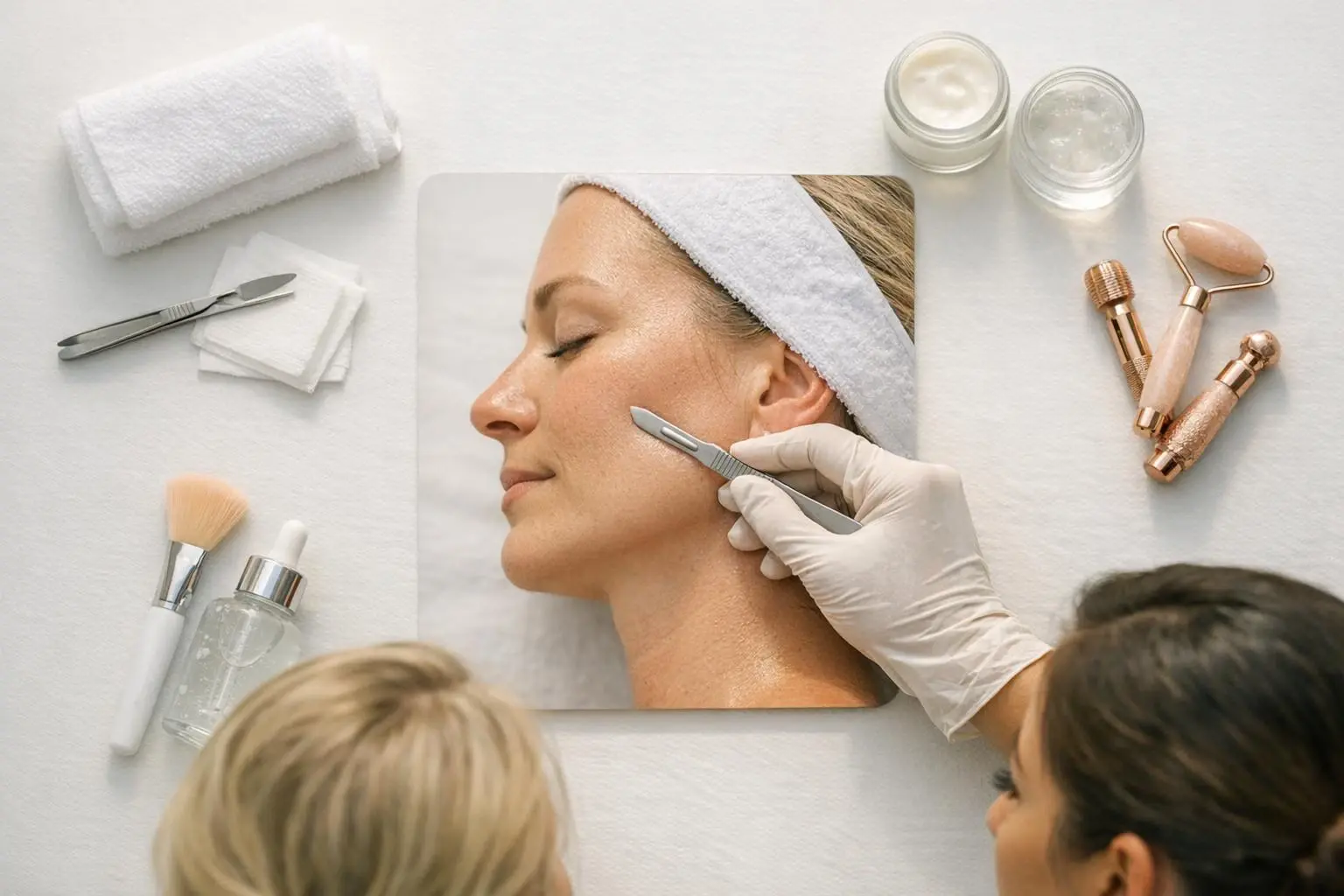
Dermaplaning is a skin treatment. Licensed estheticians or doctors do it. They use a small blade to scrape your skin.
Related glossary terms: Microdermabrasion, Skin Barrier, Hyperpigmentation.
The blade removes dead skin cells. It also removes fine hair. This hair can trap dirt and oil.
Other treatments use chemicals or tiny particles. Dermaplaning does not. It uses a clean, sharp blade.
The blade is held at an angle. This helps it remove the top layer of skin. That layer is called the stratum corneum.
This treatment feels like shaving. But it does more than shaving. Shaving only cuts hair at the surface.
Dermaplaning takes off dead skin too. It removes hair at the root. This makes skin feel smoother.
Most people can try dermaplaning. It works for sensitive skin too. But not if you have acne or open cuts.
The treatment starts with clean skin. They wash off oils and makeup. This removes dirt from your face.
The esthetician pulls skin tight. They use a new, clean blade. They scrape in short, gentle strokes.
The whole process takes 20 to 30 minutes. It depends on how much skin they treat. Then they put on calming products.
They may use a serum or mask. This helps your skin feel better. It also adds moisture.
Dermaplaning doesn’t use harsh things. No chemicals, lasers. Or rough particles. It’s gentler than other treatments.
But it takes off the top skin layer. That layer protects you. So you must care for your skin after.
Stay out of the sun. Use sunscreen every day. Don’t use strong skincare products for a few days.
Your skin may look pink after. This goes away fast. Most people feel fine in a few hours.
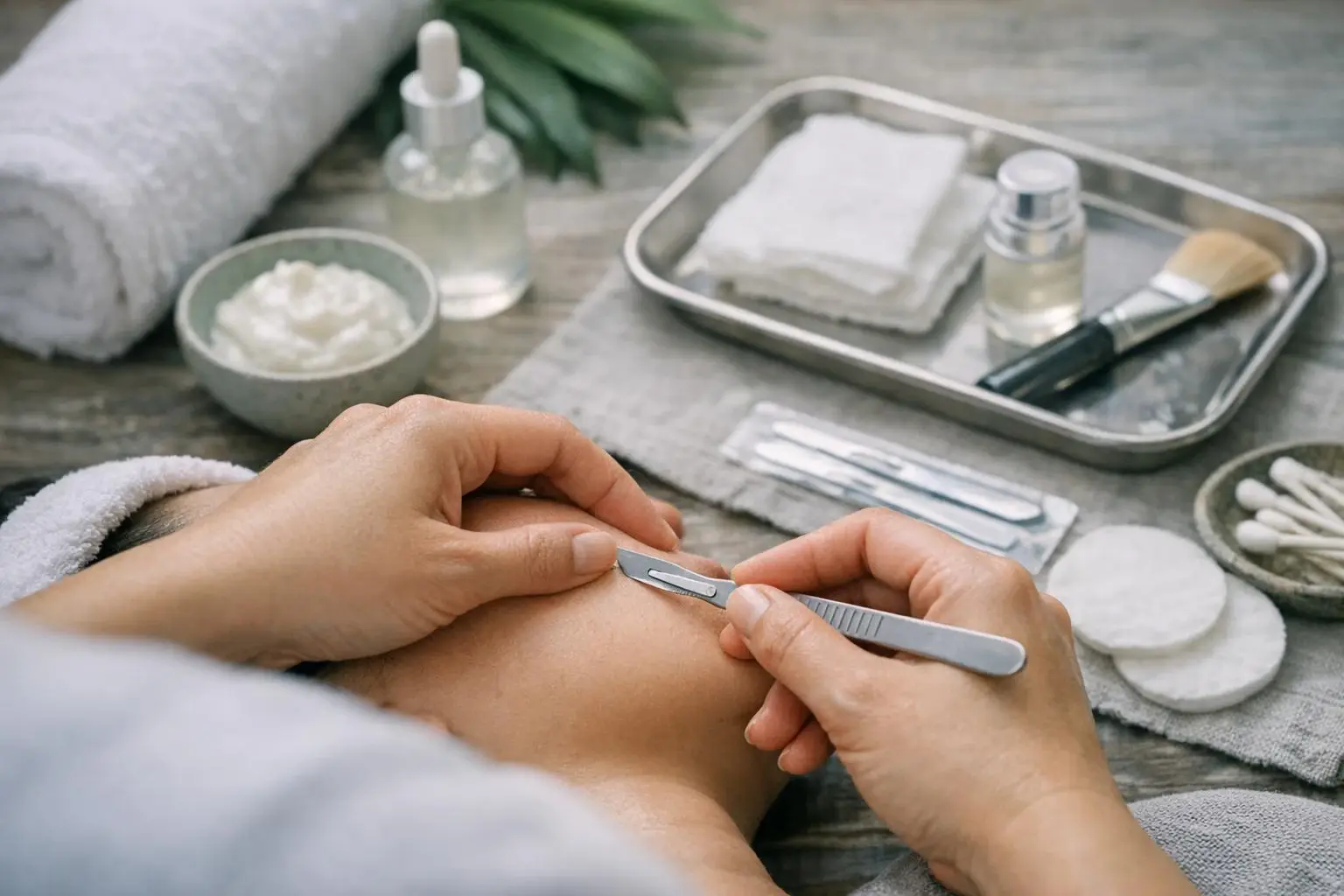
Dermaplaning makes skin smoother. It also makes skin look brighter. Many people like these benefits.
It removes dead skin and fine hair. This helps lotions work better. Your skin soaks them up more.
Serums and moisturizers work harder. They help with dark spots, wrinkles. Or acne. You’ll see better results.
Makeup goes on easier too. No hair or flakes get in the way. Foundation looks smooth and perfect.
It can help with acne scars. It also helps with fine lines. It does this by making new skin grow.
New skin grows faster. This makes your face look fresh. It can also make your skin glow.
Dry or dull skin gets better. The treatment removes old, dead cells. These cells make skin look tired.
Dermaplaning helps with many skin problems. It’s great for dull or rough skin. It also helps with dark spots.
It smooths fine lines. It can help with mild acne scars. People who wear lots of makeup love it.
Makeup goes on smoother. Your skin feels soft. It’s great before big events.
You can mix it with other treatments. Try it with a peel or facial. This gives even better results.
But don’t do it too often. Wait 3 to 4 weeks between treatments. This keeps your skin safe.
Some people should skip it. If you have bad acne or eczema, talk to a doctor first. It might make things worse.
Microdermabrasion uses a machine with abrasive particles or a diamond tip to exfoliate the skin. While dermaplaning relies on a manual scalpel to remove dead skin and hair.
Shaving only cuts hair at the surface. While dermaplaning exfoliates the skin and removes hair from the follicle, leaving skin smoother and brighter.
Chemical peels use acids to dissolve dead skin cells, whereas dermaplaning physically scrapes them away with a scalpel, making it a gentler option for sensitive skin.
Dermaplaning is most effective when performed by a trained professional who understands skin anatomy and blade technique. Over-aggressive scraping can lead to irritation or cuts. So precision and gentleness are key to achieving optimal results without damaging the skin.
A client with dry, flaky skin and visible peach fuzz visits a salon for dermaplaning before a wedding. After the treatment, their foundation applies more evenly. And their skin appears brighter in photos. They notice that their serums absorb better, reducing dry patches over the next few weeks.
Microdermabrasion is a non-invasive skin-resurfacing treatment that gently exfoliates the outer layer of dead skin cells using fine crystals or a diamond-tipped wand. It improves skin texture, reduces fine lines. And minimizes pores by stimulating cell turnover and collagen production, leaving skin smoother and brighter.
Skin Barrier is the outermost layer of the skin, called the stratum corneum, that acts as a protective shield. It prevents harmful substances like bacteria, pollutants.
Hyperpigmentation is a common skin condition where patches of skin become darker than the surrounding area due to excess melanin production. It can result from sun exposure, hormonal changes, inflammation. Or skin injuries. While usually harmless, it often affects appearance and may signal underlying skin health concerns.
Posh Boutique WPB
Contact Posh Boutique WPB for practical guidance on Dermaplaning and related beauty salon work in West Palm Beach.