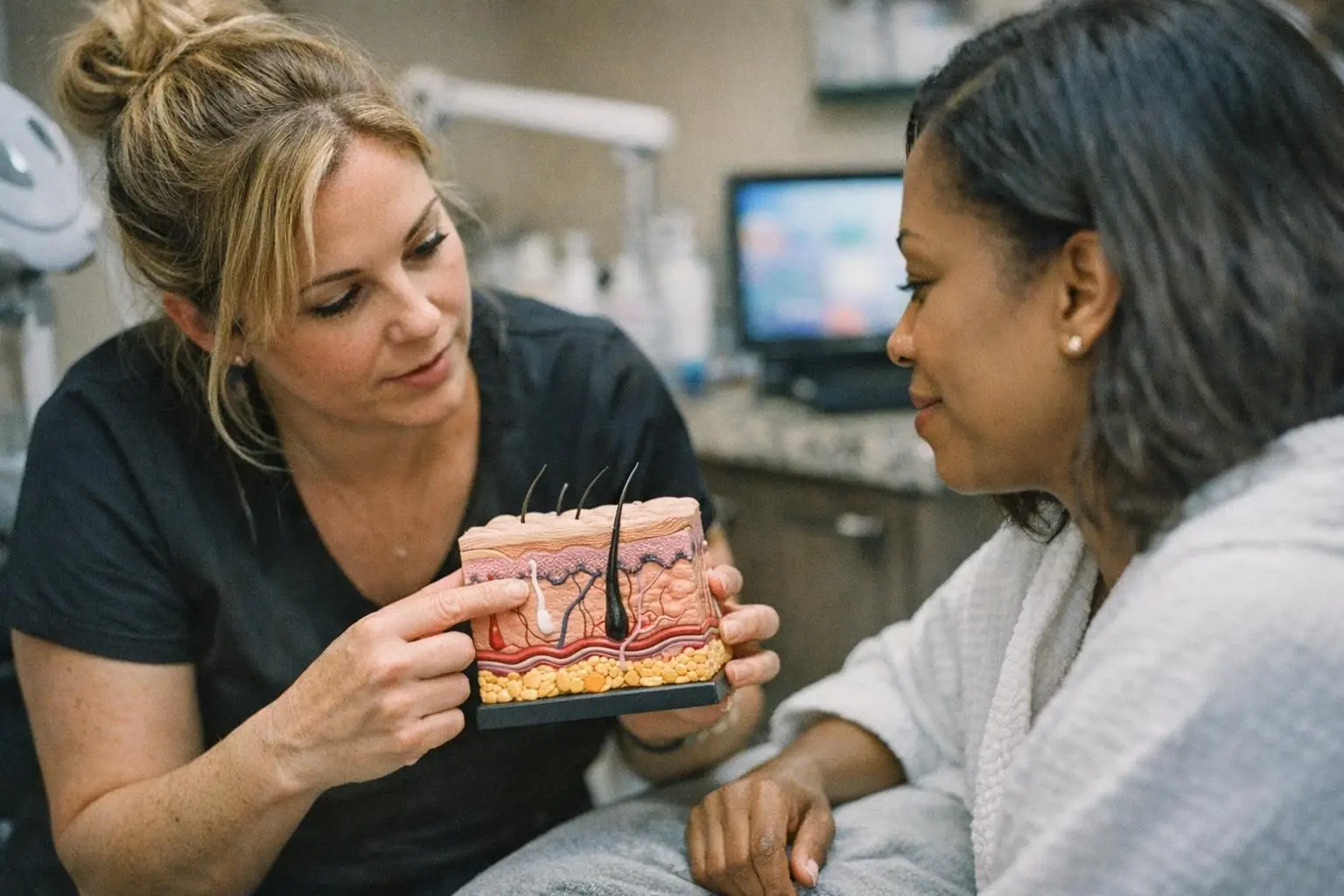
Dermis is the thick, middle layer of skin located between the outer epidermis and the deeper subcutaneous tissue. Dermis contains blood vessels, nerves, hair follicles, sweat glands, collagen, elastin. And connective tissue, providing strength, elasticity.
Term
Dermis
SEO context
Used in beauty salon planning, audits. And reporting.
Best practice
Pair the definition with examples and credible sources.

Skin has three main layers. The dermis is one of them.
It sits under the top layer. It's above the fat layer.
The top layer is thin. It keeps you safe. The dermis is thicker.
It gives skin strength. It helps skin stretch. It keeps skin from tearing.
The dermis helps you feel things. It keeps you cool. It helps cuts heal.
The dermis has two parts. The top part is the papillary dermis.
The bottom part is the reticular dermis. The top part has small blood vessels.
It also has nerve endings. The bottom part is denser.
It has big blood vessels. It holds hair roots and sweat glands.
It has two proteins. They are collagen and elastin.
These proteins make skin firm. They give skin its bounce.
The dermis is like skin's support system. Blood vessels bring food and air.
They feed the dermis. They also feed the top layer.
The top layer has no blood vessels. Nerves in the dermis feel things.
They feel touch and pain. They feel hot and cold.
They send signals to your brain. Sweat glands keep you cool.
They let out moisture. This cools your skin.
Collagen fibers make skin strong. They help skin resist tears.
Elastin fibers help skin stretch. They let skin snap back.
Age and sun hurt these fibers. They make less collagen and elastin.
This causes wrinkles. Skin sags and loses bounce.
Some treatments help. They boost collagen.
Microneedling and lasers do this. So do some facials.
They make skin smoother. They make skin firmer.
The dermis affects how skin looks. It affects how skin works.
A healthy dermis means smooth skin. A damaged dermis causes problems.
It can cause wrinkles. It can cause scars and stretch marks.
It can slow healing. The dermis has nerves and blood vessels.
They help skin feel things. They help skin heal.
Beauty pros should know this. It helps them pick the right treatments.
It helps them teach clients. Some treatments go deep.
Deep peels and microneedling do this. They work on the dermis.
Gentle scrubs work on top. They only touch the outer layer.
Knowing the difference keeps skin safe.
The dermis matters in many cases. It matters when skin needs help.
It matters after cuts or burns. It matters as skin ages.
It matters for scars and stretch marks. Some treatments work on the dermis.
Microneedling does this. So do lasers.
They make tiny injuries. This tells skin to make more collagen.
More collagen means smoother skin. It means firmer skin too.
In West Palm Beach, FL, sun is strong. It hurts the dermis.
Sun breaks down collagen. This causes early aging.
It causes dark spots. It raises skin cancer risk.
Sunscreen helps. So do antioxidants like vitamin C.
Pro treatments help too. They keep the dermis healthy.
This is key in sunny places.
The dermis is not just structural—it’s metabolically active. Collagen production declines by about 1% per year after age 30. But environmental factors like sun exposure can accelerate this loss. Protecting and stimulating the dermis is key to long-term skin health.
After a deep chemical peel, the epidermis may appear red and flaky for a few days. During this time, the dermis beneath is producing new collagen to repair and strengthen the skin, leading to improved texture and reduced fine lines over weeks.
Posh Boutique WPB
Contact Posh Boutique WPB for practical guidance on Dermis and related beauty salon work in West Palm Beach.