Epidermis is the outermost layer of the skin, acting as a protective barrier against environmental damage, bacteria. And moisture loss. Composed mainly of keratinocytes, it regenerates every 4-6 weeks and determines skin tone through melanin production. This layer plays a key role in touch sensation and immune defense. Though it lacks blood vessels.
Category
Skin anatomy
Used for
Protection, sensation. And pigmentation
Common confusion
Often mistaken for the thicker dermis below
Also called
Cuticle (in some contexts), Epidermal layer
Often discussed with
Facials, Exfoliation Treatments

The skin has a top layer called the epidermis. It protects your body like a shield.
Related glossary terms: Dermis, Skin Barrier, TEWL.
This layer is thin but strong. It has no blood vessels or fat.
Most of the epidermis is made of keratinocytes. These cells make keratin (a tough protein).
Keratin makes your skin strong. The cells stack in many layers.
The bottom layer keeps making new cells. It pushes old cells to the top.
By the time cells reach the top, they are hard and flat. They fall off after 4-6 weeks.
The epidermis also has melanocytes. These cells make melanin (skin color).
Melanin blocks UV rays from the sun. It helps stop skin damage.
Langerhans cells are also in the epidermis. They fight germs like bacteria.
The epidermis is very thin. It’s less than 0.1 millimeters thick.
It gets food and air from the layer below. That layer is called the dermis.
The epidermis renews itself. This is called keratinization.
New cells form at the bottom. They start making keratin.
As they move up, they flatten. They lose their center and fill with keratin.
At the top, they become corneocytes. These are dead, flat cells.
They are packed with keratin. A fat layer holds them together.
This fat layer keeps water out. It stops your skin from drying out.
The top layer changes size. It gets thicker where you rub it.
Your hands and feet get calluses. This gives extra protection.
Other areas stay thin. They need to bend easily.
The epidermis controls water loss. This is called TEWL (water escaping skin).
High TEWL means your skin is dry. It can get red or itchy.
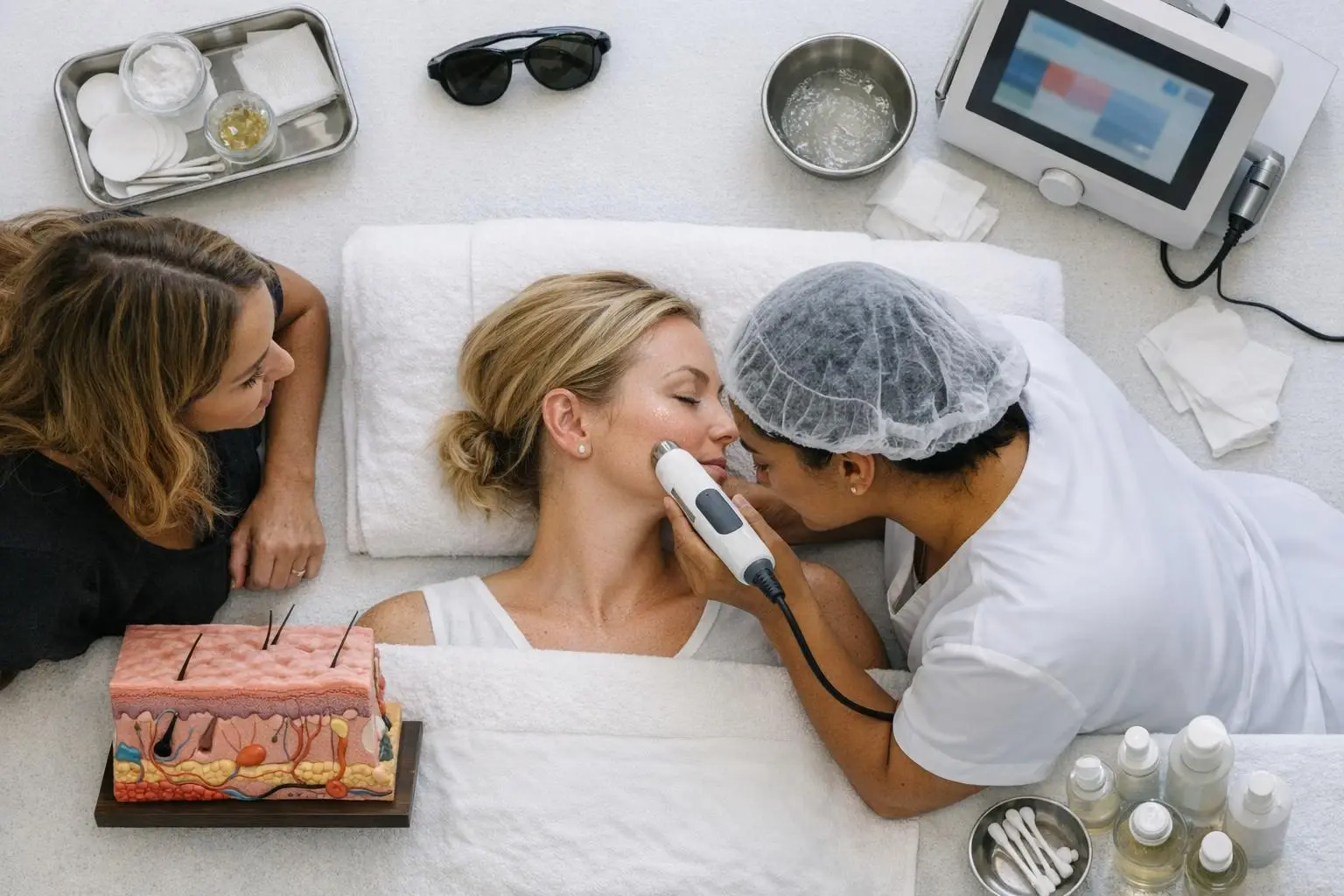
A healthy epidermis keeps skin moist. It stops germs from getting in.
It also blocks sun, dirt. And hot or cold air. This keeps you safe.
When skin gets hurt, it can’t protect well. Sunburn or cuts weaken it.
Harsh soaps can also hurt it. This makes skin dry or sore.
Some skincare products work on the epidermis. They must go through it first.
Retinoids and AHAs (skin helpers) speed up cell growth. This smooths wrinkles.
The epidermis helps fight germs. Langerhans cells spot bad invaders.
They tell your body to attack. This stops infections early.
Too much sun can hurt these cells. This makes skin less able to fight.
It can lead to skin cancer. Melanoma is one type.
The epidermis matters in many cases. Some treatments work on it directly.
Peels, scrubs. And lasers help skin renew. Experts check its thickness first.
Thin skin needs gentle care. Strong treatments can cause redness or dark spots.
Weather affects the epidermis too. Hot, wet places like West Palm Beach need care.
The skin works hard to keep water in. It also blocks sun damage.
Cold, dry places can dry out skin. The fat layer can crack or flake.
You need the right soaps and creams. They help keep skin safe.
The dermis lies beneath the epidermis and contains blood vessels, nerves. And collagen. Unlike the epidermis, it provides structural support and elasticity to the skin.
The skin barrier refers to the epidermis’s outermost layer (stratum corneum) and its lipid matrix, which prevents water loss and blocks irritants.
The stratum corneum is the top sub-layer of the epidermis, composed of dead, keratinized cells. It is the primary barrier against external threats.
The epidermis’s thickness varies by body location—eyelids are thinnest (0.05 mm). While palms and soles are thickest (1.5 mm). This variation affects how treatments like chemical peels or lasers should be applied.
After a week at the beach in West Palm Beach, a client notices their skin feels tight and looks slightly red. This indicates sun damage to the epidermis, which has triggered inflammation and disrupted its barrier function. A gentle hydrating facial with ingredients like hyaluronic acid and ceramides can help restore the epidermis’s moisture and protection.
Dermis is the thick, middle layer of skin located between the outer epidermis and the deeper subcutaneous tissue. Dermis contains blood vessels, nerves, hair follicles, sweat glands, collagen, elastin. And connective tissue, providing strength, elasticity.
Skin Barrier is the outermost layer of the skin, called the stratum corneum, that acts as a protective shield. It prevents harmful substances like bacteria, pollutants.
TEWL is the amount of water that passively evaporates through the skin’s outer layer, the epidermis, into the air each day. TEWL stands for Transepidermal Water Loss. Healthy skin keeps TEWL low. While damaged or dry skin lets more water escape, leading to dehydration and sensitivity.
Hyperpigmentation is a common skin condition where patches of skin become darker than the surrounding area due to excess melanin production. It can result from sun exposure, hormonal changes, inflammation. Or skin injuries. While usually harmless, it often affects appearance and may signal underlying skin health concerns.
Free Radicals are unstable molecules that form naturally in the body or from external sources like UV rays, pollution. And smoke. They damage skin cells by stealing electrons, leading to aging signs like wrinkles, dullness. And loss of elasticity. Antioxidants neutralize them to protect skin health.
Posh Boutique WPB
Contact Posh Boutique WPB for practical guidance on Epidermis and related beauty salon work in West Palm Beach.