Salicylic Acid is a beta hydroxy acid (BHA) derived from willow bark and other plants. It acts as a keratolytic agent, meaning it helps dissolve dead skin cells and excess oil, making it highly effective for treating acne, blackheads. And clogged pores. It's oil-soluble, allowing it to penetrate deep into pores to exfoliate and reduce inflammation.
Category
Beta Hydroxy Acid (BHA)
Used for
Acne, blackheads, clogged pores, exfoliation
Common confusion
Often mistaken for alpha hydroxy acids (AHAs), which are water-soluble
Also called
BHA, Beta Hydroxy Acid
Often discussed with
Chemical Peels, Acne Treatment
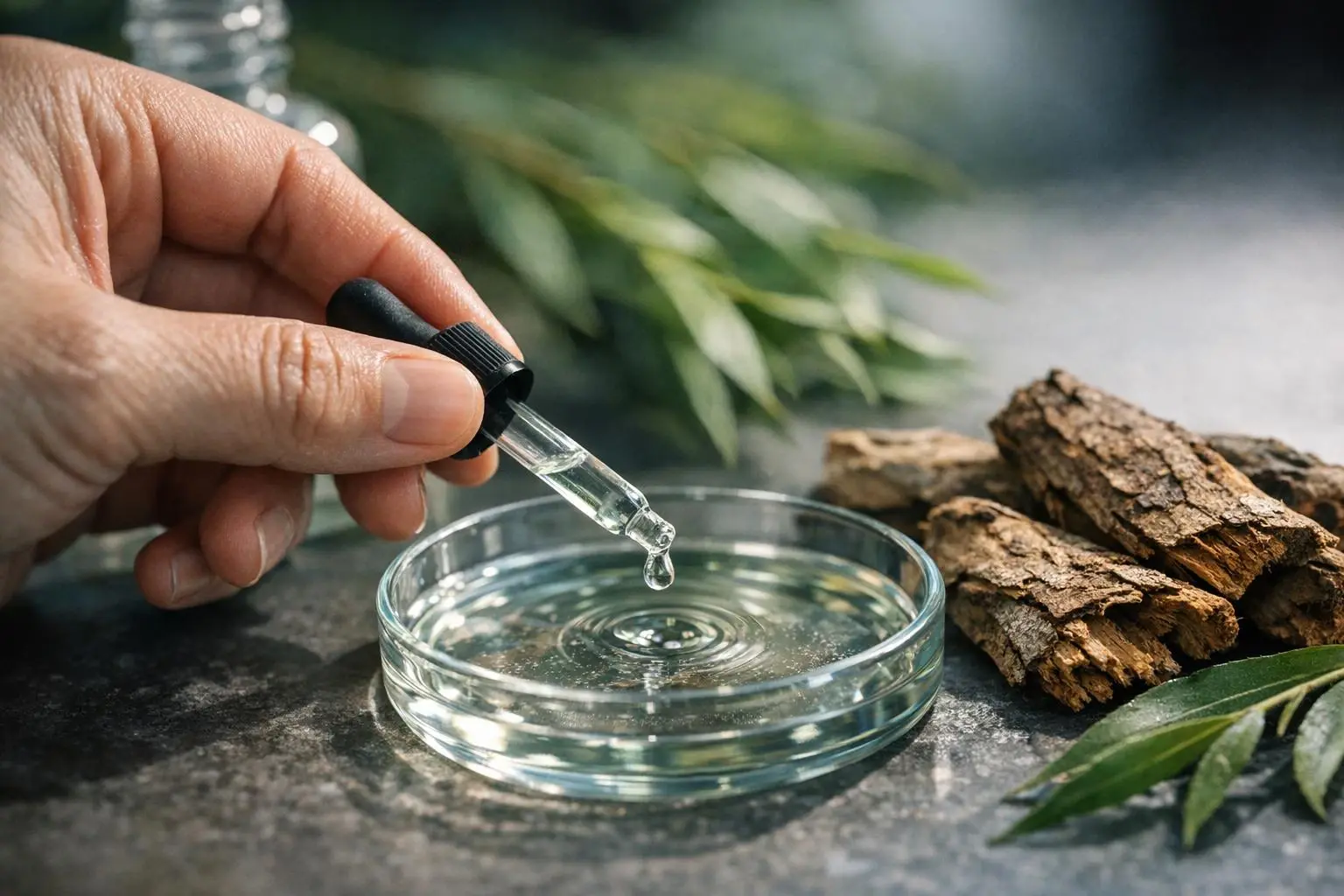
Salicylic Acid is a naturally occurring compound found in willow bark, wintergreen leaves. And sweet birch. It belongs to the beta hydroxy acid (BHA) family, which sets it apart from alpha hydroxy acids (AHAs) like glycolic or lactic acid. Unlike AHAs, which are water-soluble, Salicylic Acid is oil-soluble. This unique property allows it to penetrate sebaceous (oil) glands and exfoliate inside pores, making it particularly effective for oily and acne-prone skin.
Related glossary terms: Beta Hydroxy Acid, AHAs, Comedones.
In skincare, Salicylic Acid is primarily used for its exfoliating and anti-inflammatory properties. It helps break down the bonds between dead skin cells, promoting their removal from the skin's surface. This process, known as keratolysis, helps prevent clogged pores, a common cause of acne. And Salicylic Acid has mild anti-inflammatory effects, which can reduce redness and swelling associated with breakouts.
Salicylic Acid works through several mechanisms to improve skin health. First, it penetrates the lipid layers between skin cells, loosening and dissolving the debris that clogs pores. This includes excess sebum (oil), dead skin cells. And bacteria. By clearing these blockages, it helps prevent the formation of comedones—non-inflammatory acne lesions like blackheads and whiteheads.
Second, Salicylic Acid has a comedolytic effect, meaning it helps prevent the formation of new comedones. This is particularly beneficial for individuals with acne-prone skin, as it reduces the frequency and severity of breakouts over time. Third, it has mild anti-inflammatory properties, which can calm existing pimples and reduce redness. This makes it a versatile ingredient for both treating and preventing acne.
Salicylic Acid is typically measured in concentrations. Over-the-counter products usually contain between 0.5% and 2% Salicylic Acid. While professional treatments may use higher concentrations under supervision. It's commonly found in cleansers, toners, serums, spot treatments. And chemical peels. The pH of the product also plays a role in its effectiveness; a pH between 3 and 4 is ideal for optimal exfoliation without causing excessive irritation.
Salicylic Acid matters because it addresses one of the root causes of acne: clogged pores. Unlike topical antibiotics or benzoyl peroxide, which primarily target bacteria, Salicylic Acid works by keeping pores clear of debris. This makes it a foundational ingredient for managing acne, especially for those with oily or combination skin. Its ability to exfoliate without over-drying the skin also makes it suitable for long-term use, unlike harsher treatments that can disrupt the skin barrier.
Beyond acne, Salicylic Acid is also used to improve skin texture and tone. By promoting the turnover of dead skin cells, it can reduce the appearance of fine lines, hyperpigmentation. And rough patches. Its anti-inflammatory properties also make it useful for conditions like psoriasis and dandruff, where scaling and flaking are common.
Salicylic Acid is most valuable in the following situations:
But Salicylic Acid may not be suitable for everyone. People with dry, sensitive. Or eczema-prone skin may find it too drying or irritating. And those with an aspirin allergy should avoid Salicylic Acid, as it is chemically related to aspirin and can trigger similar allergic reactions. It is also not recommended for use during pregnancy or breastfeeding without consulting a healthcare provider.
AHAs, like glycolic and lactic acid, are water-soluble and work on the skin's surface, making them better for dry or sun-damaged skin. Salicylic Acid is oil-soluble and penetrates pores, making it ideal for oily or acne-prone skin.
Benzoyl Peroxide kills acne-causing bacteria and reduces inflammation but can be drying and bleach fabrics. Salicylic Acid exfoliates and unclogs pores but does not have antibacterial properties.
Salicylic Acid is one of the few ingredients that can effectively treat both inflammatory and non-inflammatory acne. However, its oil-solubility means it can be overused, leading to barrier damage. Always pair it with a moisturizer and sunscreen to maintain skin health.
A client with oily skin and frequent blackheads visits a beauty salon in West Palm Beach. The esthetician recommends a Salicylic Acid cleanser to use twice daily, followed by a lightweight moisturizer. After four weeks, the client notices fewer breakouts and smoother skin texture, as the Salicylic Acid has kept their pores clear and reduced oil buildup.
Beta Hydroxy Acid is a group of oil-soluble exfoliating compounds used in skincare to penetrate deep into pores, dissolve excess oil. And remove dead skin cells. The most common type, salicylic acid, treats acne, blackheads. And uneven skin texture by unclogging pores and reducing inflammation without stripping the skin’s natural moisture.
AHAs are a group of water-soluble acids derived from fruits, milk. Or sugar cane that exfoliate the skin's surface. AHAs work by loosening the bonds between dead skin cells, promoting cell turnover. And revealing smoother, brighter skin underneath. Common AHAs include glycolic acid, lactic acid. And citric acid, often used in skincare products and professional treatments.
Comedones are small, flesh-colored or dark bumps that form when hair follicles become clogged with oil, dead skin cells. And bacteria. Comedones appear most often on the face, neck, chest. And back and are a primary sign of acne. They come in two main types: open comedones (blackheads) and closed comedones (whiteheads).
Sebum is an oily, waxy substance produced by sebaceous glands in the skin. Sebum lubricates, waterproofs. And protects the skin and hair by preventing dryness and providing a barrier against bacteria and fungi. Overproduction or underproduction of sebum can lead to skin issues like acne or dryness.
Skin Barrier is the outermost layer of the skin, called the stratum corneum, that acts as a protective shield. It prevents harmful substances like bacteria, pollutants.
Posh Boutique WPB
Contact Posh Boutique WPB for practical guidance on Salicylic Acid and related beauty salon work in West Palm Beach.