Skin pH is a measure of how acidic or alkaline the surface of the skin is, typically ranging from 4.5 to 5.5 on the pH scale. This slightly acidic environment, called the acid mantle, helps protect against bacteria, pollution. And moisture loss while maintaining a healthy skin barrier.
Category
Skin chemistry
Used for
Maintaining skin barrier health
Common confusion
Skin pH is not the same as skin type (oily, dry, sensitive)
Also called
Acid mantle, Skin acidity level
Often discussed with
Customized Skincare Protocols, Deep Cleansing Facials

Skin pH shows how acidic or alkaline your skin is. It's measured on a scale from 0 to 14.
Related glossary terms: Skin Barrier, Sebum, TEWL.
A pH of 7 is neutral. That's like pure water. Healthy skin pH is usually between 4.5 and 5.5.
This makes skin a little acidic. The acidity forms a shield. It's called the acid mantle.
This shield keeps bad bacteria out. It also blocks pollution. It stops too much water from leaving your skin.
The acid mantle works like a hidden guard. When skin pH is just right, good bacteria grow.
Bad germs stay under control. Harsh soaps or scrubbing too much can break this balance.
So can products that are too alkaline. This weakens your skin. It can cause dryness, redness. Or pimples.
Skin pH helps explain why some products work for some people. But they cause problems for others.
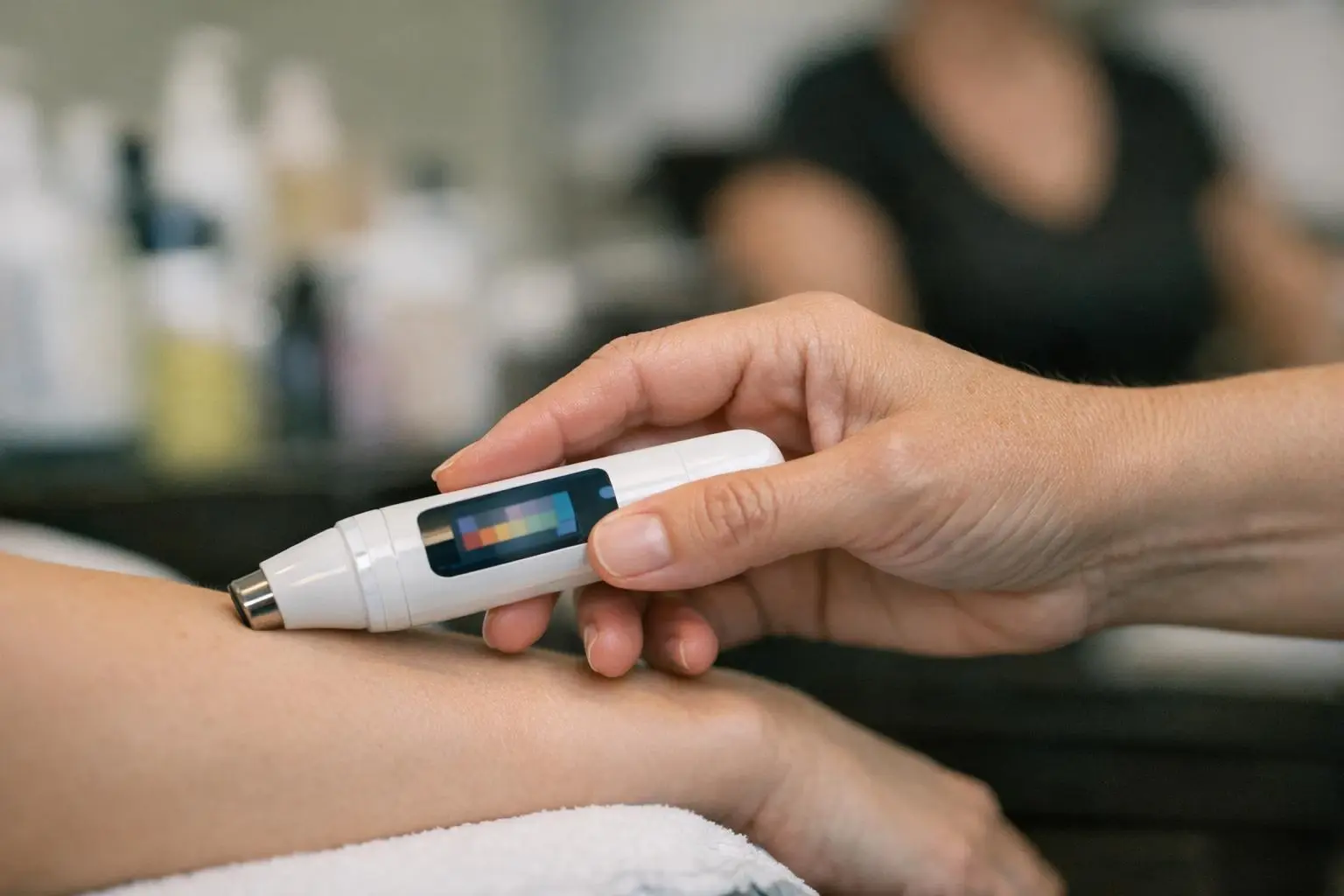
You can test skin pH with a meter or strips. The meter has a small probe.
You put it on clean, dry skin. The forehead or arm works best. The reading shows up fast.
Experts use digital meters. They are very accurate. At-home kits use strips.
They give a general idea of your skin's acidity.
The pH scale is special. Each number jump means ten times more acid.
For example, pH 5 is ten times more acidic than pH 6. That's why small changes matter.
Sweat, oil. And humidity can change readings. Keep conditions the same for the best results.
Skin pH helps your skin stay strong. When it's balanced, skin holds moisture.
It fights off germs. It heals small cuts fast. But if pH is off, skin gets weak.
It can get dry, sensitive. Or break out. Soap with high pH can dry skin.
It strips natural oils. That leaves skin open to irritation.
Skin pH also affects how products work. Some ingredients need a certain pH.
Vitamin C, retinoids. And acids work best this way. If pH is wrong, they don't work as well.
They may even irritate skin. Take glycolic acid. It's an exfoliant.
It works best at pH 3–4. If skin pH is too high, it won't sink in right.
Skin pH matters more when skin is stressed. Here are common times:
Watch your skin pH. It helps pick the best products. Oily skin may need a lower pH.
Dry or sensitive skin does better near 5.5. Knowing this helps your skin stay healthy.
It helps you choose products wisely. Your skin will thank you.
The skin barrier is the outermost layer of skin that protects against moisture loss and irritants. While skin pH refers to the acidity level that supports this barrier.
TEWL measures how much water evaporates from the skin, indicating barrier health. While skin pH measures acidity, which influences how well the barrier functions.
Skin pH can vary slightly across different areas of the face and body. For instance, the forehead may have a slightly higher pH than the cheeks, which is why targeted skincare can sometimes yield better results than a one-size-fits-all approach.
After switching to a pH-balanced cleanser, a client with dry, sensitive skin noticed less redness and tightness. Their previous soap, with a pH of 9, had disrupted their acid mantle, making their skin more reactive to environmental stressors like wind and humidity.
Skin Barrier is the outermost layer of the skin, called the stratum corneum, that acts as a protective shield. It prevents harmful substances like bacteria, pollutants.
Sebum is an oily, waxy substance produced by sebaceous glands in the skin. Sebum lubricates, waterproofs. And protects the skin and hair by preventing dryness and providing a barrier against bacteria and fungi. Overproduction or underproduction of sebum can lead to skin issues like acne or dryness.
TEWL is the amount of water that passively evaporates through the skin’s outer layer, the epidermis, into the air each day. TEWL stands for Transepidermal Water Loss. Healthy skin keeps TEWL low. While damaged or dry skin lets more water escape, leading to dehydration and sensitivity.
AHAs are a group of water-soluble acids derived from fruits, milk. Or sugar cane that exfoliate the skin's surface. AHAs work by loosening the bonds between dead skin cells, promoting cell turnover. And revealing smoother, brighter skin underneath. Common AHAs include glycolic acid, lactic acid. And citric acid, often used in skincare products and professional treatments.
Salicylic Acid is a beta hydroxy acid (BHA) derived from willow bark and other plants. It acts as a keratolytic agent, meaning it helps dissolve dead skin cells and excess oil, making it highly effective for treating acne, blackheads. And clogged pores. It's oil-soluble, allowing it to penetrate deep into pores to exfoliate and reduce inflammation.
Posh Boutique WPB
Contact Posh Boutique WPB for practical guidance on Skin pH and related beauty salon work in West Palm Beach.