Transepidermal Water Loss is the natural process where water passes from the deeper layers of the skin through the epidermis and evaporates into the air. This passive diffusion occurs constantly and is essential for maintaining skin hydration. But excessive loss can lead to dryness, irritation. And a weakened skin barrier.
Category
Skin physiology
Measured by
TEWL meters (g/m²/h)
Used for
Assessing skin barrier function and hydration levels
Common confusion
Mistaking it for sweating, which is active water release from glands
Also called
TEWL
Often discussed with
Facials, Customized Skincare Protocols
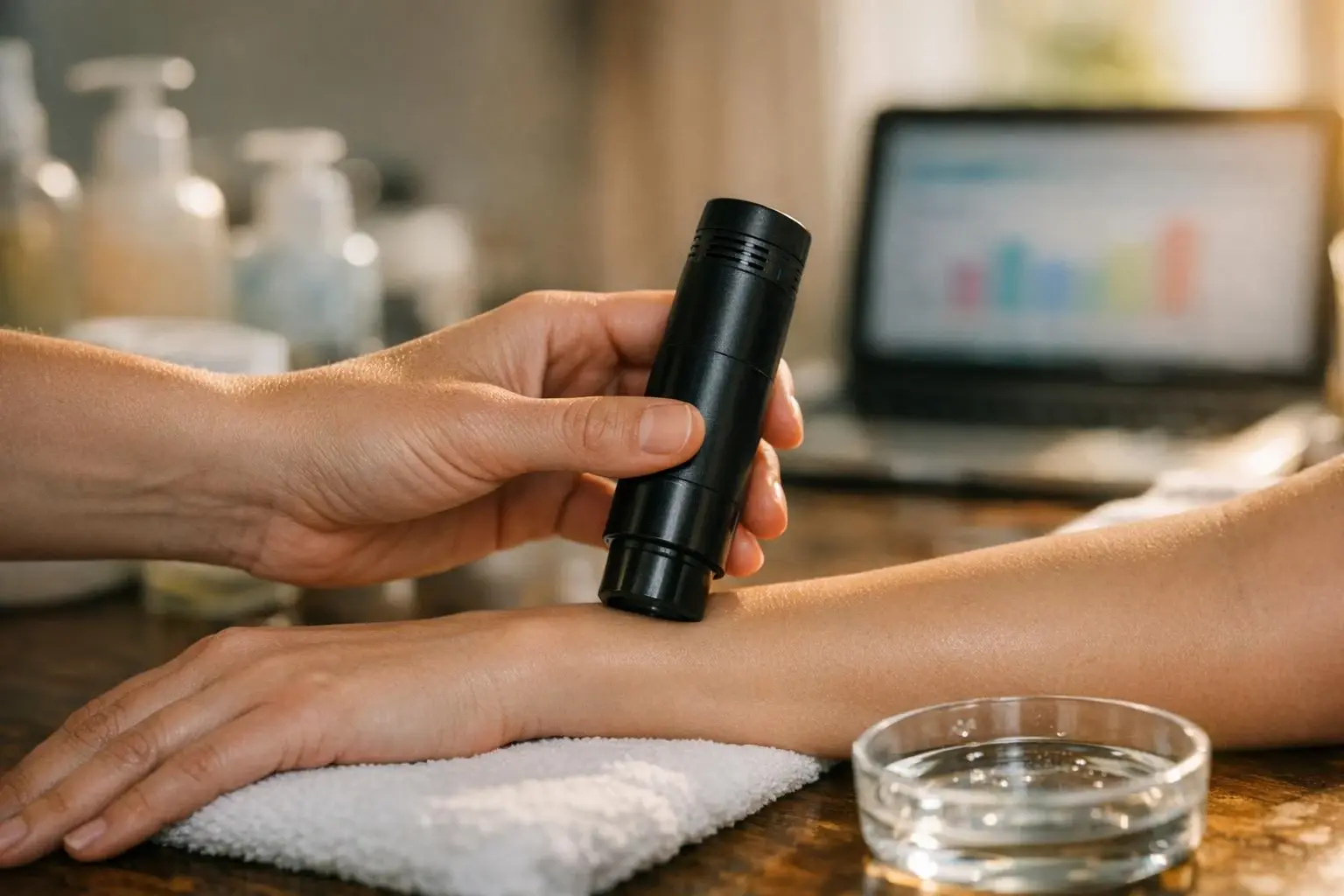
Transepidermal Water Loss (TEWL) is the amount of water that evaporates from the skin’s surface into the surrounding air. Unlike sweating, which is an active process controlled by sweat glands, TEWL is a passive process driven by the skin’s natural moisture gradient. The skin’s outermost layer, the stratum corneum, acts as a barrier to regulate this loss. But factors like humidity, temperature. And skin health can alter how much water escapes.
Related glossary terms: Skin Barrier, Epidermis, Sebum.
In healthy skin, TEWL is balanced to maintain hydration and protect against environmental damage. But when the skin barrier is compromised—due to aging, harsh products. Or medical conditions—TEWL increases, leading to dryness, flakiness. And irritation. Understanding TEWL helps professionals and individuals make informed decisions about skincare routines and treatments.
TEWL is measured using a device called a TEWL meter, which calculates the rate of water evaporation from the skin’s surface. The meter typically reports results in grams of water per square meter per hour (g/m²/h). A higher reading indicates greater water loss, signaling a weakened skin barrier. While a lower reading suggests better moisture retention.
Professionals use TEWL measurements in clinical and salon settings to assess skin health, evaluate the effectiveness of skincare products. And tailor treatments. For example, a facialist might measure TEWL before and after a hydrating treatment to determine its impact. Environmental conditions, such as humidity and temperature, can affect readings. So measurements are often taken in controlled settings for accuracy.
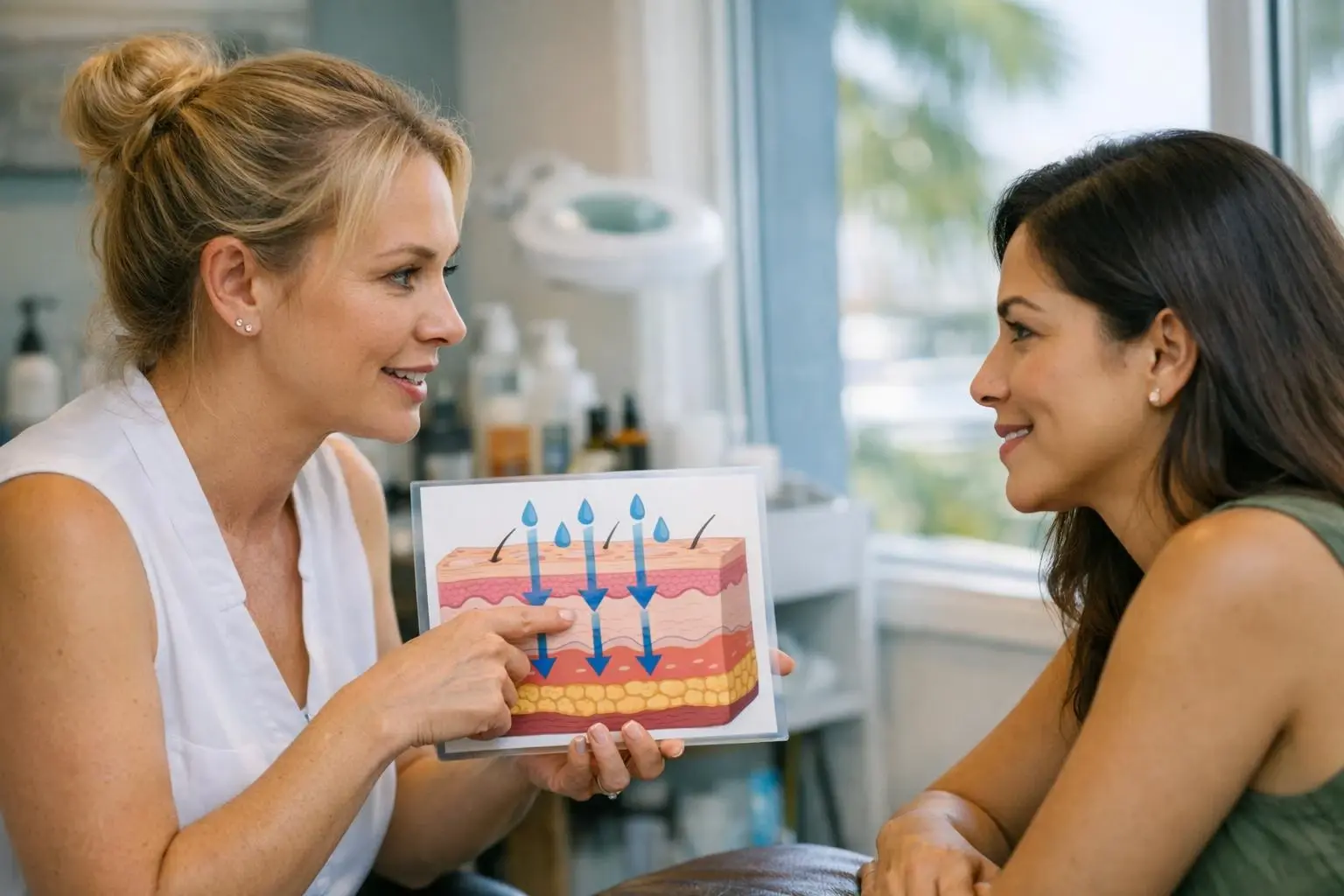
TEWL is a key indicator of skin barrier function. A healthy skin barrier locks in moisture, protects against irritants. And maintains overall skin resilience. When TEWL is elevated, the skin becomes more vulnerable to dryness, sensitivity. And inflammation. That means particularly important for individuals with conditions like eczema, psoriasis. Or rosacea, where the skin barrier is already compromised.
For skincare professionals, monitoring TEWL helps in recommending appropriate products and treatments. For instance, ingredients like ceramides, hyaluronic acid. And occlusive agents (e.g., petrolatum) can help reduce TEWL and improve hydration. Conversely, over-exfoliation or using harsh cleansers can increase TEWL, leading to long-term skin damage.
TEWL becomes especially important in situations where the skin is exposed to environmental stressors or undergoes treatments that affect its barrier. Common scenarios include:
In West Palm Beach, FL, where humidity levels are often high, TEWL may be less noticeable compared to drier climates. But air conditioning, sun exposure. And frequent swimming in chlorinated pools can still disrupt the skin barrier, making TEWL a relevant concern for local skincare routines.
The skin barrier is the outermost layer of the skin that prevents water loss and protects against irritants. While TEWL measures how much water escapes through this barrier.
Sweating is an active process where sweat glands release water to cool the body, whereas TEWL is passive water evaporation from the skin’s surface.
Hydration refers to the skin’s water content. While TEWL measures how quickly that water is lost to the environment.
TEWL readings can vary based on the time of day, skin location. And even emotional stress. For accurate assessments, always measure under consistent conditions and compare trends over time rather than relying on a single reading.
After a client in West Palm Beach received a deep chemical peel, their esthetician measured their TEWL to assess skin barrier recovery. The initial reading was high, indicating increased water loss. So the esthetician recommended a hydrating serum and occlusive moisturizer to restore balance.
Skin Barrier is the outermost layer of the skin, called the stratum corneum, that acts as a protective shield. It prevents harmful substances like bacteria, pollutants.
Epidermis is the outermost layer of the skin, acting as a protective barrier against environmental damage, bacteria. And moisture loss. Composed mainly of keratinocytes, it regenerates every 4-6 weeks and determines skin tone through melanin production. This layer plays a key role in touch sensation and immune defense. Though it lacks blood vessels.
Sebum is an oily, waxy substance produced by sebaceous glands in the skin. Sebum lubricates, waterproofs. And protects the skin and hair by preventing dryness and providing a barrier against bacteria and fungi. Overproduction or underproduction of sebum can lead to skin issues like acne or dryness.
Hydrafacial is a multi-step, non-invasive skin treatment that combines cleansing, exfoliation, extraction, hydration. And antioxidant protection in a single session. Hydrafacials use a patented device to deliver serums tailored to specific skin concerns, such as acne, dryness.
Microdermabrasion is a non-invasive skin-resurfacing treatment that gently exfoliates the outer layer of dead skin cells using fine crystals or a diamond-tipped wand. It improves skin texture, reduces fine lines. And minimizes pores by stimulating cell turnover and collagen production, leaving skin smoother and brighter.
Posh Boutique WPB
Contact Posh Boutique WPB for practical guidance on Transepidermal Water Loss and related beauty salon work in West Palm Beach.