Tretinoin is a prescription-strength retinoid, a derivative of vitamin A, used primarily to treat acne, reduce fine lines. And improve skin texture and tone. Tretinoin works by accelerating cell turnover, unclogging pores. And stimulating collagen production, leading to clearer, smoother. And more youthful-looking skin over time.
Category
Topical retinoid medication
Used for
Acne, fine lines, hyperpigmentation, rough texture
Common confusion
Often mistaken for over-the-counter retinol
Also called
Retinoic acid, All-trans retinoic acid (ATRA)
Often discussed with
Acne Treatment, Anti-Aging Facials
Tretinoin is a medicine. It comes from vitamin A. It's part of the retinoid family.
Related glossary terms: Retinoids, Hyperpigmentation, Skin Barrier.
You can't buy tretinoin without a prescription. It's stronger than retinol. It can irritate your skin.
You put it on your skin. It comes as creams, gels. Or lotions. Many people use it for acne.
It also helps with fine lines and wrinkles. It makes skin smoother. Skin tone gets better too.
The FDA approved tretinoin in the 1970s. They first used it for acne. Later, they found it helps with sun damage.
Sun damage is called photoaging. It makes skin look older. Tretinoin is now popular for anti-aging too.
You need a doctor's help to use it. A dermatologist (skin doctor) can guide you. They help reduce side effects.
Tretinoin works by attaching to skin cells. It speeds up cell turnover. This is how skin renews itself.
Skin normally renews every 28 to 40 days. This slows down with age and sun damage. Tretinoin makes it faster.
It helps skin shed dead cells quickly. New, healthy cells grow instead. This unclogs pores and reduces acne.
It also smooths skin. Fine lines and rough texture fade. Your skin looks better.
Tretinoin also boosts collagen and elastin. These are proteins. They keep skin firm and stretchy.
Collagen decreases as we age. That causes wrinkles and sagging. Tretinoin helps bring collagen back.
It evens out skin color too. Dark spots and melasma fade. Melasma is a type of skin darkening.
It spreads melanin evenly. Melanin gives skin its color. This makes skin tone smoother.
Use tretinoin once a day. Put it on at night. Sunlight can make it less effective.
A pea-sized amount is enough. Spread it on clean, dry skin. Don't put it on right after washing.
Wait 20 to 30 minutes first. This helps avoid irritation. You can use moisturizer with it.
Add other products slowly. Don't use too many at once. This keeps skin from getting overwhelmed.
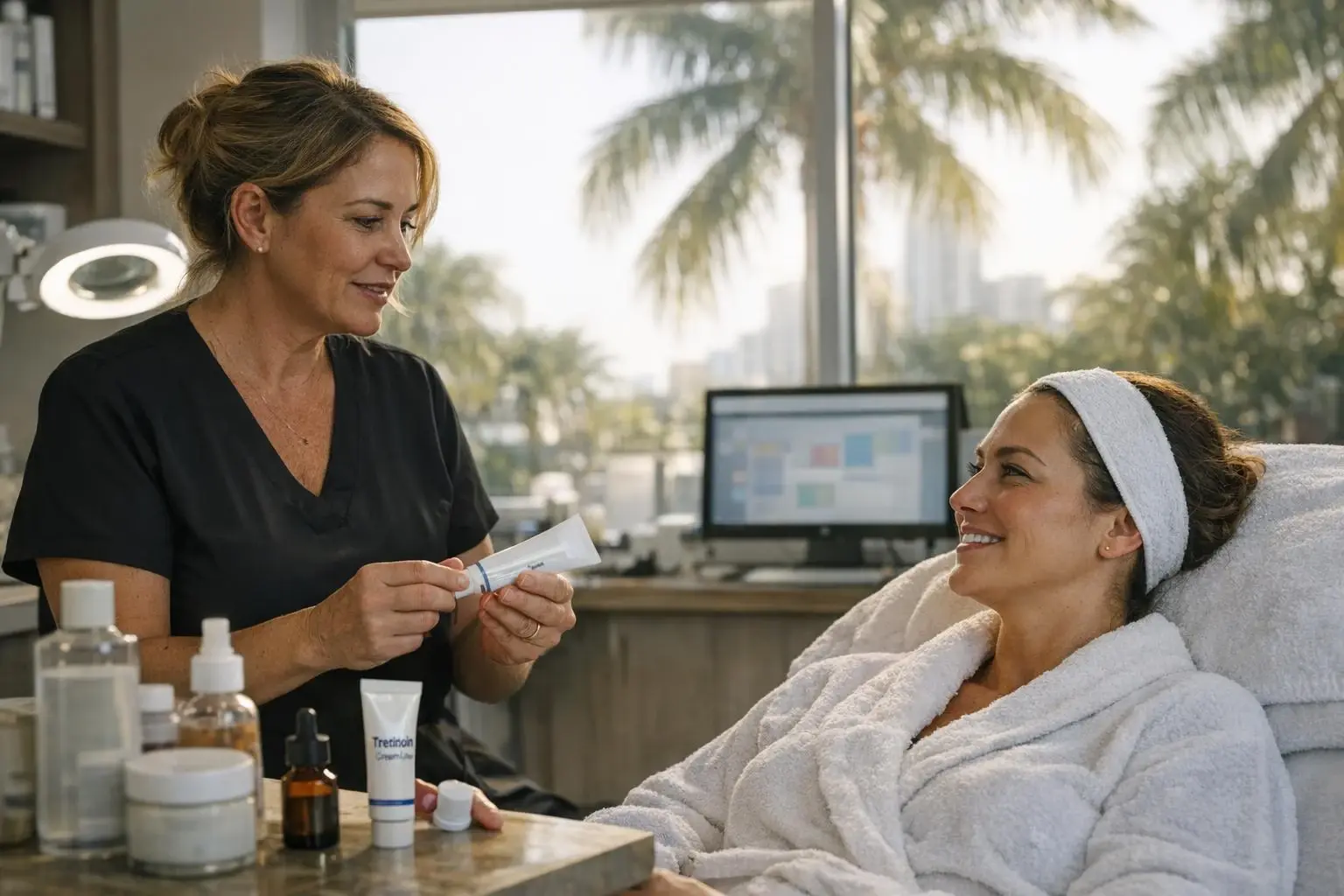
Tretinoin works well for acne and aging. It's one of the best treatments. It helps with clogged pores.
It reduces breakouts and swelling. For aging, it smooths fine lines. Skin texture gets better too.
It boosts collagen over time. This keeps skin looking young. It's great for long-term use.
You need a prescription for tretinoin. It's stronger than over-the-counter options. It works faster too.
Retinol is weaker. It takes longer to see results. Tretinoin shows changes in 4 to 6 weeks.
Full benefits take months. Studies prove it works. Doctors trust it for skin care.
Tretinoin helps with bad acne. Over-the-counter treatments may not work. It's also great for aging signs.
It smooths fine lines and wrinkles. It evens out skin tone. Sun-damaged skin gets better too.
It helps with rough texture. Dark spots fade. It's good for photoaging (sun damage).
Use it as part of your routine. It's not a quick fix. Results take weeks or months.
Always use sunscreen with it. Tretinoin makes skin sensitive to sun. Sunburn can make dark spots worse.
Skipping sunscreen causes damage. Protect your skin every day.
Tretinoin isn't for everyone. Sensitive skin may get irritated. Eczema or rosacea can get worse.
Pregnant or breastfeeding women shouldn't use it. It may harm the baby. Talk to a doctor first.
They can check if it's right for you. They look at your skin and health. They help you decide.
Retinol is a milder, over-the-counter retinoid that converts to tretinoin in the skin. It is less potent and takes longer to produce results. But it is gentler and more suitable for sensitive skin.
Adapalene is a synthetic retinoid available over the counter or by prescription. It is primarily used for acne and is less irritating than tretinoin. But it may be less effective for anti-aging.
Isotretinoin is an oral retinoid used for severe acne. Unlike topical tretinoin, it affects the entire body and requires strict medical supervision due to potential side effects.
Tretinoin is a gold standard in dermatology. But its effectiveness depends on proper use. Start with a low concentration, apply it sparingly. And always follow up with moisturizer and sunscreen. Overuse or incorrect application can lead to irritation, compromising results and skin health.
A 35-year-old woman with sun-damaged skin and fine lines begins using tretinoin 0.05% cream three nights a week. After six weeks, she notices reduced redness and smoother skin. By three months, her fine lines are less noticeable. And her skin tone appears more even. She continues using tretinoin as part of her nightly routine, pairing it with sunscreen during the day to protect her progress.
Retinoids are a class of chemical compounds derived from vitamin A that are used in skincare to promote cell turnover, reduce fine lines. And improve skin texture and tone. They work by stimulating collagen production and accelerating the shedding of dead skin cells, making them effective for treating acne, hyperpigmentation. And signs of aging.
Hyperpigmentation is a common skin condition where patches of skin become darker than the surrounding area due to excess melanin production. It can result from sun exposure, hormonal changes, inflammation. Or skin injuries. While usually harmless, it often affects appearance and may signal underlying skin health concerns.
Skin Barrier is the outermost layer of the skin, called the stratum corneum, that acts as a protective shield. It prevents harmful substances like bacteria, pollutants.
AHAs are a group of water-soluble acids derived from fruits, milk. Or sugar cane that exfoliate the skin's surface. AHAs work by loosening the bonds between dead skin cells, promoting cell turnover. And revealing smoother, brighter skin underneath. Common AHAs include glycolic acid, lactic acid. And citric acid, often used in skincare products and professional treatments.
Salicylic Acid is a beta hydroxy acid (BHA) derived from willow bark and other plants. It acts as a keratolytic agent, meaning it helps dissolve dead skin cells and excess oil, making it highly effective for treating acne, blackheads. And clogged pores. It's oil-soluble, allowing it to penetrate deep into pores to exfoliate and reduce inflammation.
Posh Boutique WPB
Contact Posh Boutique WPB for practical guidance on Tretinoin and related beauty salon work in West Palm Beach.