Wood's Lamp Examination is a diagnostic procedure using a special ultraviolet (UV) light to reveal skin conditions not visible under normal light. The lamp emits a specific wavelength that causes certain skin issues, like fungal infections, bacterial growth. Or pigment disorders, to fluoresce or glow in distinct colors, helping professionals assess skin health accurately.
Category
Diagnostic skin assessment
Used for
Detecting skin infections, pigment changes. And damage
Common confusion
Not the same as LED light therapy for skin rejuvenation
Also called
Wood's Light Examination, UV Skin Examination
Often discussed with
Facials, Hyperpigmentation Treatment
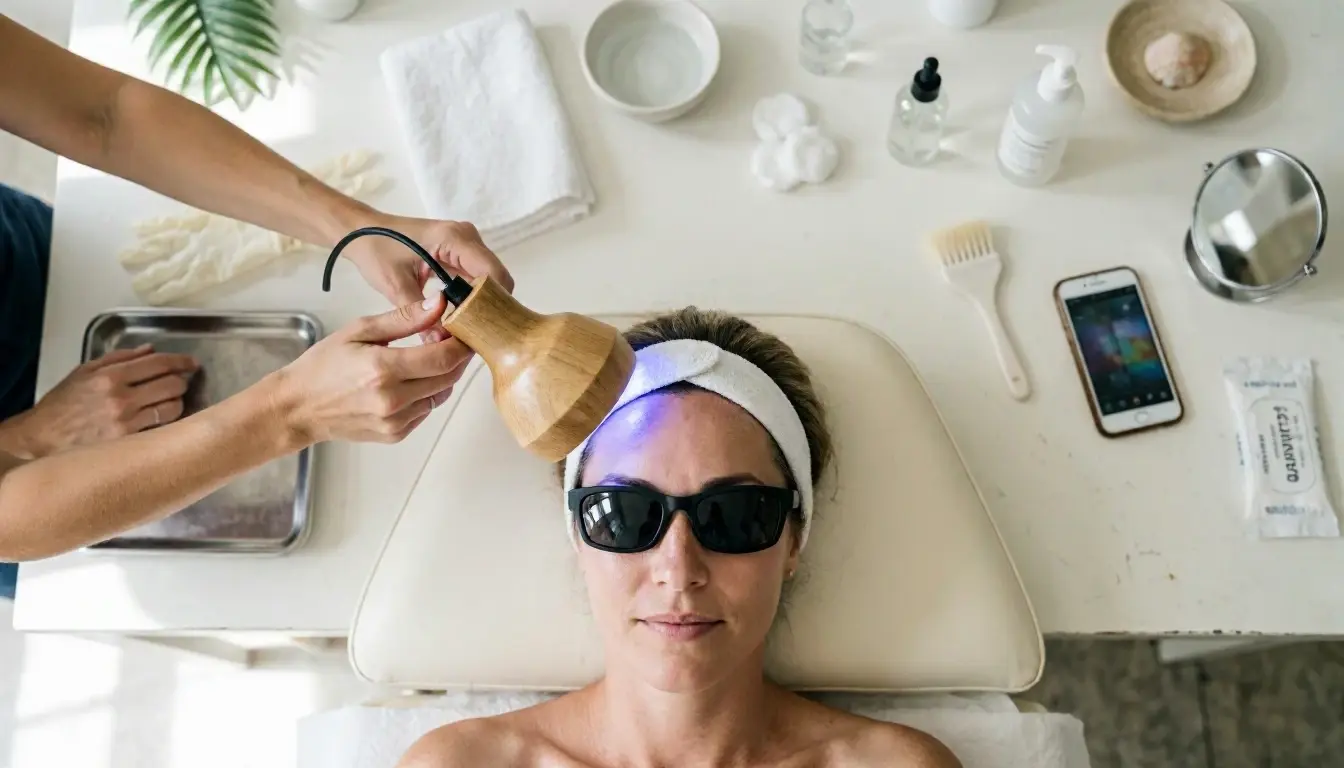
Wood's Lamp Examination is a tool used in skincare and dermatology to assess skin conditions that are difficult to see with the naked eye. The device emits ultraviolet (UV) light at a wavelength of about 365 nanometers, which causes certain substances in the skin to fluoresce. Or glow, in specific colors. This fluorescence helps professionals identify issues like fungal infections, bacterial growth. Or pigment disorders that might otherwise go unnoticed.
Related glossary terms: LED Light Therapy, Comedogenic, Skin Barrier.
The examination is quick, painless. And non-invasive, making it a valuable part of skincare assessments. It's commonly used in beauty salons, dermatology clinics. And medical spas to provide a deeper understanding of a client's skin health. While the lamp itself is simple to use, interpreting the results requires training and experience, as different colors and patterns indicate different conditions.
During a Wood's Lamp Examination, a professional holds the lamp a few inches away from the skin in a darkened room. The UV light interacts with substances in the skin, such as melanin, bacteria. Or fungi, causing them to emit visible light in distinct colors. For example, fungal infections like ringworm may appear bright green. While certain bacterial infections can glow coral pink. Pigment disorders, such as vitiligo, often show up as bright white or blue-white under the lamp.
The process is straightforward and typically takes just a few minutes. The professional examines areas of concern, such as the face, scalp. Or body. And notes any fluorescence. The results are immediate, allowing for quick identification of potential issues. But Keep in mind, not all skin conditions fluoresce under the lamp. So it is often used alongside other diagnostic methods for a full assessment.
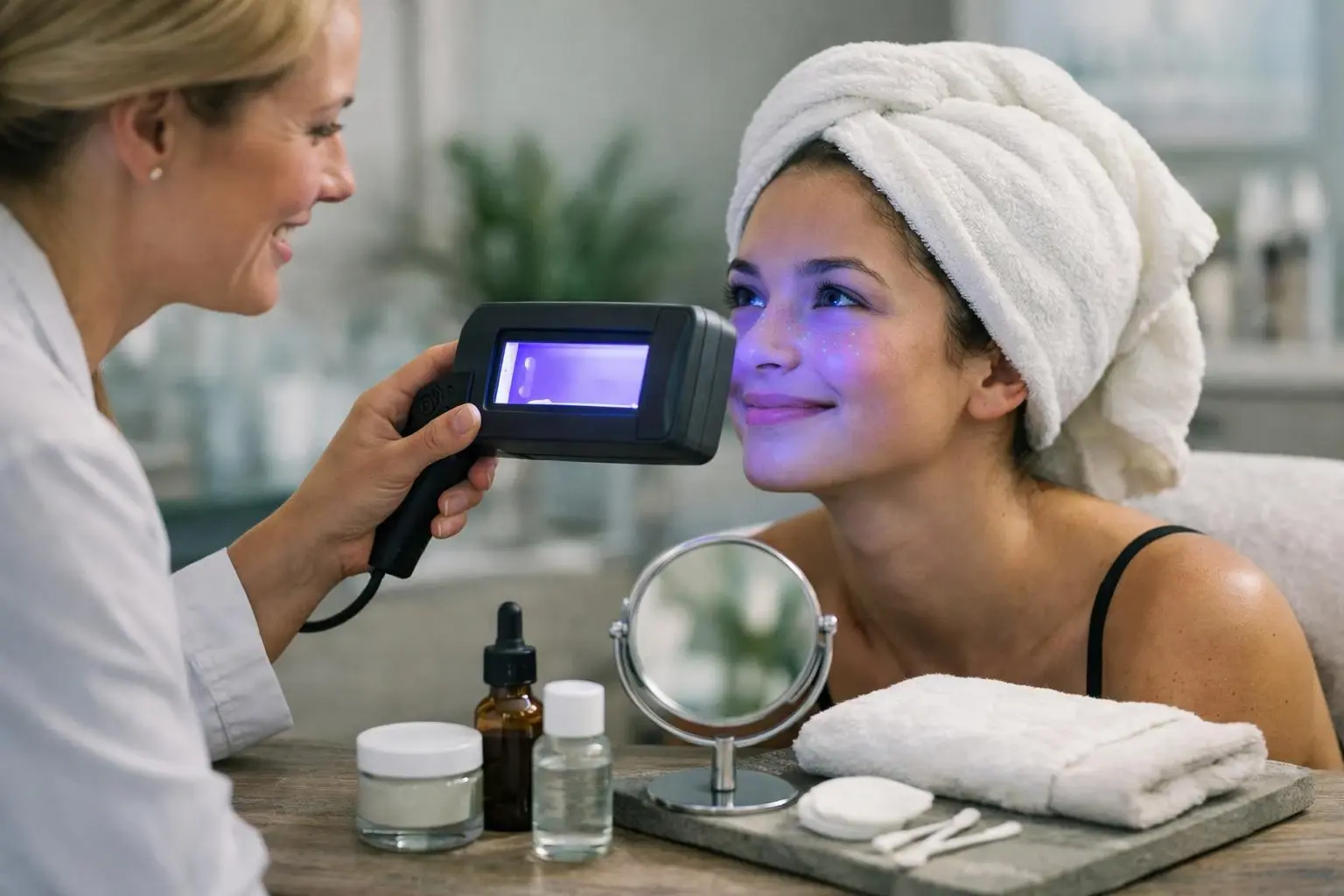
Wood's Lamp Examination is a valuable tool because it provides insights into skin health that are not visible under normal lighting. For example, it can reveal early signs of sun damage, such as uneven pigmentation. Or detect fungal infections that might be mistaken for dry skin or eczema. This early detection allows professionals to recommend appropriate treatments before conditions worsen, improving outcomes for clients.
The examination also helps professionals tailor skincare routines and treatments to address specific concerns. For instance, if the lamp reveals areas of hyperpigmentation, a professional might recommend treatments like chemical peels or serums to target those areas. Similarly, if bacterial growth is detected, a customized cleansing routine can be suggested to address the issue.
Wood's Lamp Examination is particularly useful in situations where skin conditions are not easily visible or when a client has concerns about specific issues. For example, it is often used during initial skincare consultations to assess overall skin health and identify hidden problems. It is also helpful for monitoring the progress of treatments, such as acne therapies or pigmentation treatments, to determine their effectiveness.
In West Palm Beach, FL, where sun exposure is common, Wood's Lamp Examination can be especially useful for detecting sun damage or pigmentation issues caused by UV rays. It is also beneficial for clients with chronic skin conditions, such as acne or rosacea, as it can reveal underlying bacterial or fungal factors contributing to these issues. By incorporating this tool into skincare assessments, professionals can provide more accurate diagnoses and personalized treatment plans.
LED Light Therapy uses different wavelengths of light to treat skin conditions like acne or wrinkles. While Wood's Lamp Examination is a diagnostic tool that reveals hidden skin issues under UV light.
Blacklight testing is a general term for using UV light to detect substances. While Wood's Lamp Examination is specifically designed for assessing skin health and conditions.
Wood's Lamp Examination is most effective when combined with a thorough visual assessment and client history. While the lamp reveals hidden issues, interpreting the results requires context and experience to avoid misdiagnosis.
During a skincare consultation at a beauty salon in West Palm Beach, a client mentions persistent dry patches on their scalp. The esthetician uses a Wood's Lamp and notices a bright green fluorescence, indicating a fungal infection. This allows the professional to recommend an appropriate antifungal treatment instead of a generic moisturizer.
LED Light Therapy is a non-invasive skin treatment that uses specific wavelengths of light to stimulate cellular activity, reduce inflammation. And promote healing. LED devices emit blue, red. Or near-infrared light, each targeting different skin concerns like acne, wrinkles. Or redness. The treatment is painless, requires no downtime. And is commonly used in dermatology and esthetics.
Comedogenic is a term used to describe ingredients or products that clog pores and promote the formation of comedones—blackheads and whiteheads. Comedogenic substances can block hair follicles, leading to acne breakouts, especially in individuals with oily or acne-prone skin. The term is commonly used in skincare to identify products that may worsen acne or congestion.
Skin Barrier is the outermost layer of the skin that acts as a protective shield against environmental damage, bacteria. And moisture loss. It consists of skin cells and lipids that work together to maintain hydration, prevent irritation. And keep the skin healthy. A strong skin barrier is essential for smooth, resilient. And glowing skin.
Fitzpatrick Scale is a scientific skin-type classification system that predicts how skin reacts to sun exposure based on color and sensitivity. Developed in 1975 by Harvard dermatologist Thomas Fitzpatrick, it ranks skin from Type I (very fair, always burns) to Type VI (very dark, never burns), helping professionals assess risks for sun damage, burns. And treatments like lasers or chemical peels.
Posh Boutique WPB
Contact Posh Boutique WPB for practical guidance on Wood's Lamp Examination and related beauty salon work in West Palm Beach.