pH Balance is a measure of how acidic or alkaline a substance is, ranging from 0 to 14. A pH of 7 is neutral, below 7 is acidic. And above 7 is alkaline. Maintaining the correct pH balance in skincare products and hair treatments ensures they work effectively without causing irritation or damage to the skin and hair.
Category
Chemistry and skincare
Used for
Skincare, haircare. And beauty treatments
Common benchmark
Skin pH: 4.5–5.5 (slightly acidic)
Common confusion
pH balance is not the same as moisture or hydration levels
Also called
pH level, acid-base balance
Often discussed with
Facials, Chemical Peels
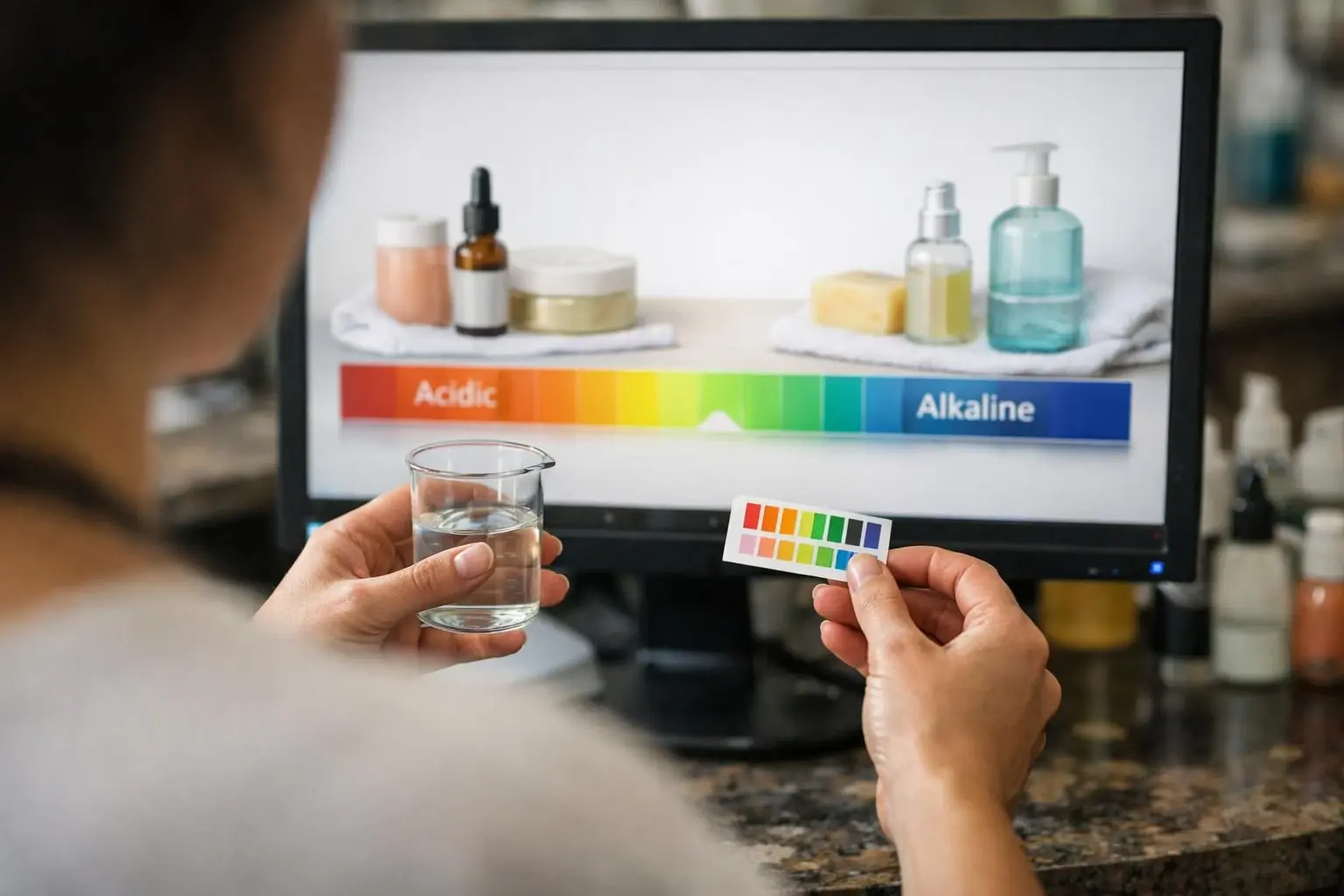
pH balance shows how acidic or alkaline something is. It's measured on a scale from 0 to 14.
Related glossary terms: Skin Barrier, AHAs, BHAs.
A pH of 7 is neutral. Pure water has a pH of 7.
Numbers below 7 mean acid. Numbers above 7 mean alkaline.
Skin and hair have a natural pH. It's usually between 4.5 and 5.5.
This pH helps protect against bacteria and pollution. It also blocks other stressors.
If a product's pH is too high or low, it can hurt your skin. It can break the skin's protective barrier.
This can cause dryness, redness. Or irritation. It may even cause breakouts.
Soaps and cleansers can be too alkaline. They can strip natural oils from your skin.
This leaves your skin open to damage. But the right pH keeps skin healthy.
The pH scale measures acidity. It counts hydrogen ions in a substance.
Tools like pH strips test pH. Meters and litmus paper work too.
Salons use these tools. They test products for skin and hair safety.
Skincare products have set pH levels. Cleansers, toners. And exfoliants are examples.
AHAs and BHAs are acids. They help remove dead skin gently.
These work best at a slightly acidic pH. Hair treatments also need the right pH.
Relaxers and perms use alkaline pH. They change hair's shape for styling.
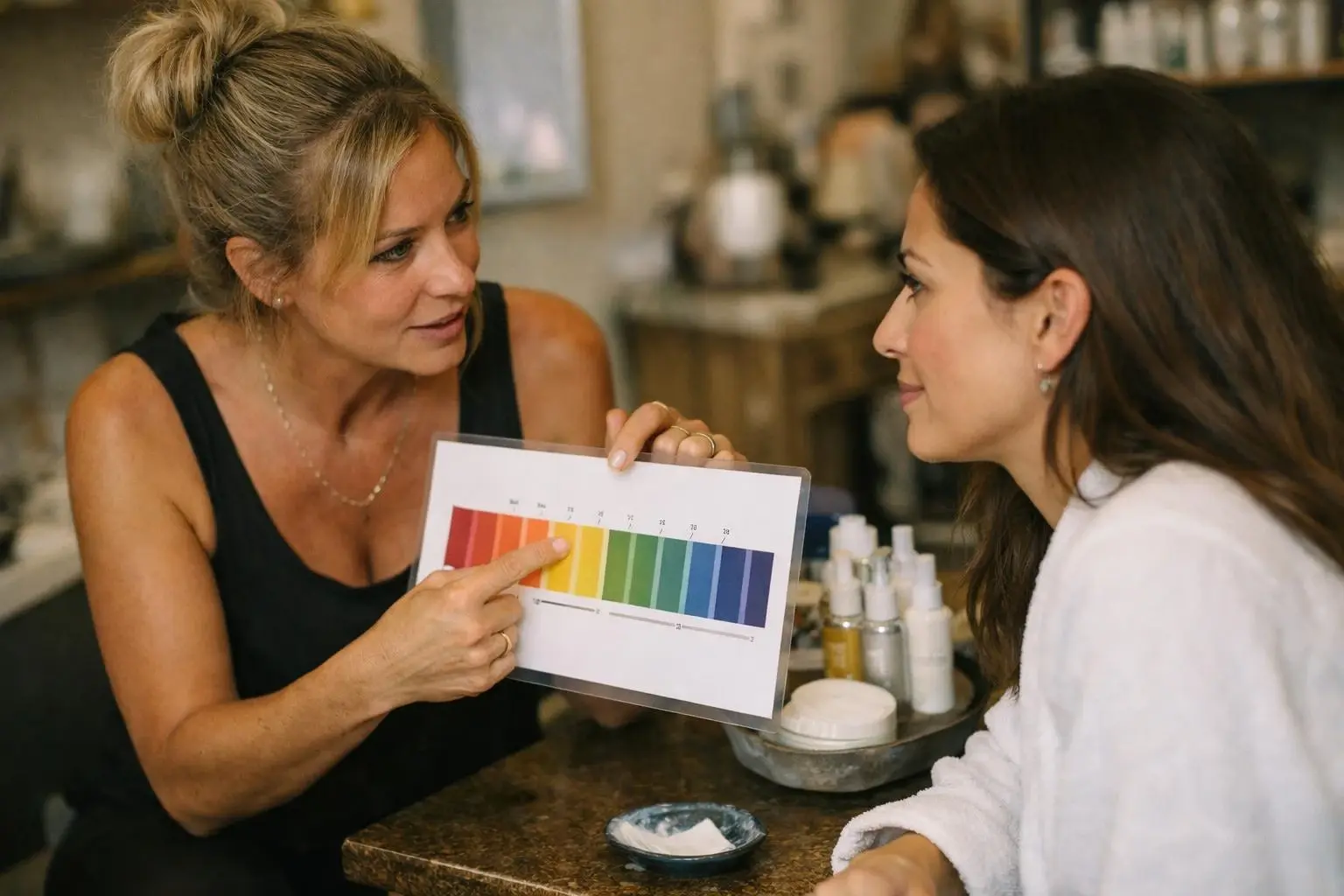
The right pH keeps skin and hair healthy. The skin has a thin protective layer.
This layer needs a slightly acidic pH. It fights bacteria and damage.
Wrong pH can cause acne or eczema. It can also make skin sensitive.
Hair needs balance too. Wrong pH makes hair dry or frizzy.
This can cause breakage. Hair may look dull.
pH-balanced products help. They keep skin and hair safe.
A good toner restores pH after washing. The right shampoo smooths hair.
This adds shine. It also makes hair easier to manage.
Without balance, products may not work. They might even harm you.
pH matters after harsh treatments. Chemical peels or lasers can change skin's pH.
This makes skin more sensitive. PH-balanced products help it heal.
They restore the skin's barrier. This stops irritation.
In West Palm Beach, FL, pH is key. Sun and humidity affect skin.
Heat and sweat can change pH. This can cause breakouts or dryness.
Local salons suggest pH-balanced products. These help skin stay healthy.
Haircare also needs the right pH. Coloring or heat styling can raise pH.
This damages hair. Acidic conditioners help close the hair cuticle.
They lock in moisture. They also protect hair.
Color-treated hair needs pH balance. It keeps color bright and fresh.
The skin barrier is the outermost layer of the skin that protects against moisture loss and environmental damage. While pH balance refers to the acidity or alkalinity that supports this barrier.
The acid mantle is a thin, protective film on the skin’s surface with a slightly acidic pH, whereas pH balance is the measure of this acidity.
Even small pH imbalances can have big effects. For example, a cleanser with a pH of 8 or higher can disrupt the skin’s acid mantle within minutes, leading to long-term sensitivity. Always patch-test new products to gauge their impact on your skin’s pH.
After a day at the beach in West Palm Beach, a client’s skin might feel tight and dry due to sun exposure and saltwater. A licensed esthetician could recommend a pH-balanced toner to restore the skin’s natural acidity, helping it retain moisture and defend against irritation.
Skin Barrier is the outermost layer of the skin that acts as a protective shield against environmental damage, bacteria. And moisture loss. It consists of skin cells and lipids that work together to maintain hydration, prevent irritation. And keep the skin healthy. A strong skin barrier is essential for smooth, resilient. And glowing skin.
AHAs are a group of water-soluble acids derived from fruits, milk. Or sugar cane that exfoliate the skin’s surface. AHAs work by breaking the bonds between dead skin cells, helping them shed more easily. Common types include glycolic acid, lactic acid. And mandelic acid, used to improve texture, brightness. And hydration in skincare treatments.
BHAs are oil-soluble beta hydroxy acids used in skincare to exfoliate dead skin cells, unclog pores. And reduce inflammation. The most common BHA is salicylic acid, which penetrates deep into pores to dissolve excess oil and debris, making it ideal for oily, acne-prone. Or combination skin types.
Glycolic Acid is a colorless, odorless alpha hydroxy acid (AHA) derived from sugarcane that acts as a gentle exfoliant. It dissolves dead skin cells on the surface, unclogs pores. And promotes cell turnover, improving skin texture, brightness. And hydration when used in proper concentrations and formulations.
Posh Boutique WPB
Contact Posh Boutique WPB for practical guidance on pH Balance and related beauty salon work in West Palm Beach.